

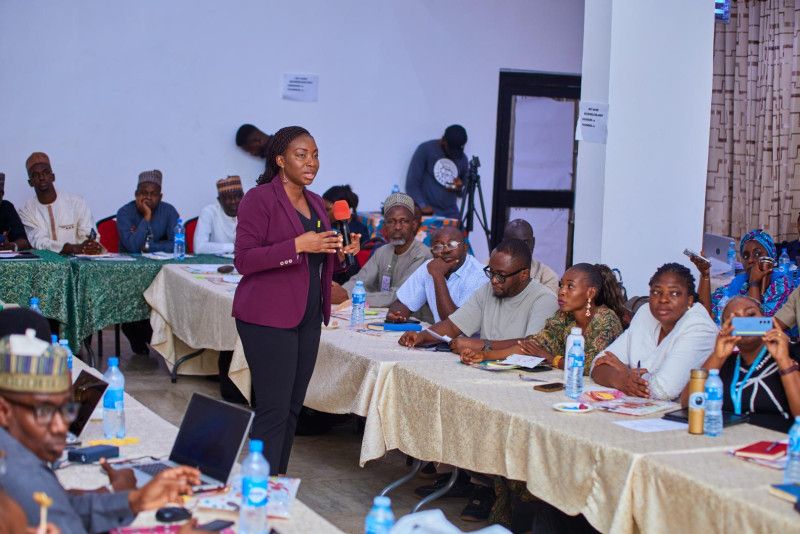
Nigeria is expanding the training of health workers in HIV prevention as the country seeks to strengthen access to pre exposure prophylaxis, or PrEP, and advance its goal of ending AIDS as a public health threat by 2030.
The National AIDS, Viral Hepatitis and Sexually Transmitted Infections Control Programme brought together 80 health workers from 32 states and the Federal Capital Territory in May for a six-day national training of trainers on PrEP.
The participants included doctors, nurses, pharmacists, programme officers, academics and community representatives.
PrEP is medication taken by people who do not have HIV to reduce their risk of acquiring the virus.
The training was designed to increase the number of health workers capable of providing HIV prevention counselling and PrEP services. Participants were trained to assess who could benefit from PrEP, explain available prevention choices and support clients in continuing their preferred prevention method.
The 80 trainees are expected to pass their knowledge to other health workers in their states and facilities.
Follow up training has already reached 90 participants in Benue State, 118 in Taraba State and 26 in Ekiti State.
“Our pool of master trainers was not enough to meet demand,” Taiwo Olakunle, PrEP lead at the national programme, said. “This training expands that pool and equips participants to train others.”
Nigeria has an estimated 1.9 million people living with HIV, while about 41 million people were living with HIV worldwide in 2025, according to the information provided for the initiative. Women and girls accounted for 53 per cent of the global total.
The programme comes as Nigeria works to strengthen HIV prevention services and integrate them into existing health systems.
The training followed a national PrEP assessment conducted in 2025 by the national programme and the World Health Organization. The assessment identified differences in training coverage and opportunities to incorporate PrEP into antenatal care, sexual and reproductive health services, sexually transmitted infection services and support for people affected by gender based violence.
For Dr Aminatu Makarfi Umar, a gynaecologist in Kaduna State who participated in the initiative, HIV prevention should become part of routine care for women who could benefit from it.
“Every pregnant woman at increased risk of HIV deserves to know her prevention options,” she said. “I will make sure this becomes part of routine care in my clinic.”
The government led training was supported by the World Health Organization and funded by the Children’s Investment Fund Foundation. Other participating organisations included the Clinton Health Access Initiative, Excellence Community Education Welfare Scheme, Heartland Alliance Ltd/GTE, Root to Rise and the Society for Family Health.
WHO provided technical guidance, supported the development of national guidelines and helped revise the training curriculum.
The initiative forms part of the implementation of Nigeria’s National HIV and AIDS Strategic Plan 2026-2030, launched in June, and complements the National HIV Prevention Plan 2026-2030.
The next phase will focus on translating the training into services at health facilities and monitoring indicators such as the number of people who test HIV negative and are assessed as eligible for PrEP, those who start PrEP and those who continue or discontinue treatment.
“Training is the starting point,” said Dr Mya Ngon, WHO team lead for Disease Prevention and Control. “What matters is how this translates into consistent, respectful and evidence-based care.”