

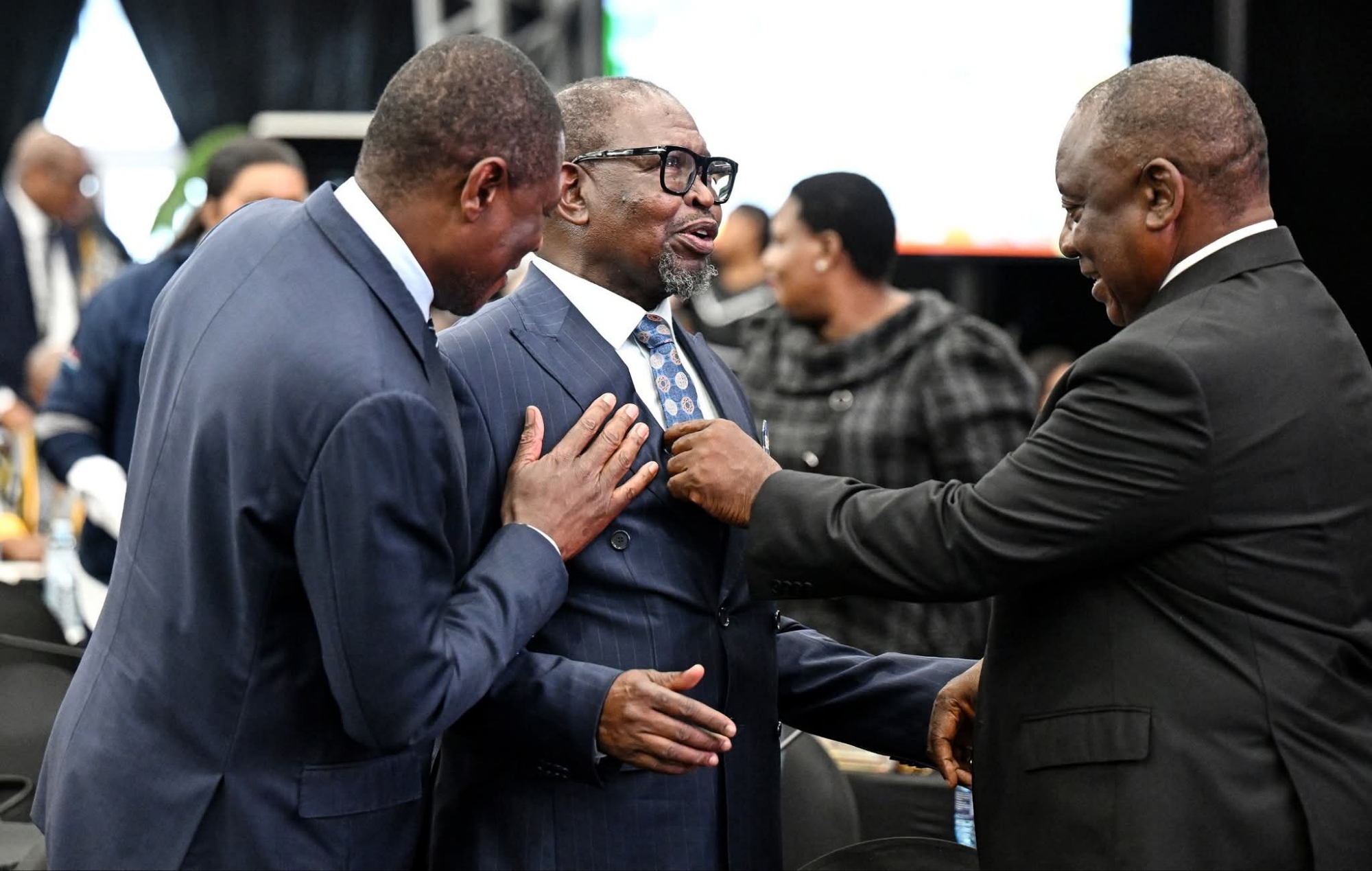
Buried beneath the headline figures of South Africa’s 2026 budget lies a more profound narrative, a government attempting to fundamentally rewire its relationship with the economy and its citizens. Finance Minister Enoch Godongwana’s fiscal plan is not merely about balancing the books, it is a high stakes bet on structural reform, with local government and ailing state owned enterprises as the primary theatres of operation.
For years, the dysfunction of municipalities has been a primary drag on growth and public trust. From potholed roads to collapsing water systems, the decay is both physical and financial. The Minister’s diagnosis was blunt. “The proportion of clean audits remains unacceptably low,” he stated, noting that 63% of municipalities are in financial distress.
The remedy proposed is a radical shift in accountability, centred on a new R27.7 billion performance linked grant for metro trading services in electricity, water, sanitation, and solid waste. The logic is surgical, revenue collected for a specific service must be reinvested in that service.
Citing the City of Johannesburg as a cautionary tale, Mr. Godongwana highlighted that while the city collects R11.9 billion in water revenue, a paltry R1.3 billion is allocated to Johannesburg Water for capital expenditure. This has resulted in a crippling R64 billion maintenance backlog. The new system aims to ring fence revenue, forcing municipalities to match collection with reinvestment. Failure to meet reform and operational targets will result in budget cuts, a powerful, if potentially disruptive, incentive for change.
“It entrenches operational and financial management reform,” the Minister explained. “Under the new system, failure to meet reform and operational targets will result in budgets being reduced.”
This philosophy extends beyond metros. The Municipal Infrastructure Grant, a vital funding stream for smaller towns, is being overhauled with a “split delivery model.” Competent municipalities will continue to receive direct funding, while those plagued by capacity or governance failures will see their funds channelled through capable district municipalities or accredited agencies. The message to persistently failing local governments is stark, shape up, or lose control of your funds.
The reformist zeal is equally evident in the logistics and energy sectors, where Operation Vulindlela is finally yielding tangible results. Mr. Godongwana confirmed that regulatory reforms have unlocked significant private investment in energy generation, helping to stabilise the grid and accelerate the transition to renewables. In logistics, the focus is on dismantling the rail and port bottlenecks that have throttled exports.
A key development is the progress on the Credit Guarantee Vehicle (CGV), a partnership with the World Bank designed to mobilise massive private investment for Eskom’s critically needed transmission infrastructure. The vehicle is expected to be operational later this year, representing a novel public private solution to a problem that has strangled economic growth.
Furthermore, the amendment of Public Private Partnership (PPP) regulations is beginning to bear fruit. With 63 projects in the pipeline, including a major initiative to revamp six border posts and the procurement of a new operator for the Gautrain, Mr. Godongwana signalled a new era for private sector collaboration. “Public institutions should increasingly see PPPs as a viable alternative method for delivery,” he urged.
Taken together, these measures represent a profound shift in the philosophy of the South African state. It is moving, however imperfectly, from a controller of resources to an enabler of capacity, whether that capacity resides in a reformed municipality, a private investor, or a public private partnership. The success of this budget will ultimately be judged not by its deficit numbers, but by whether these ambitious reforms can survive the inertia and resistance of the very systems they seek to change.