

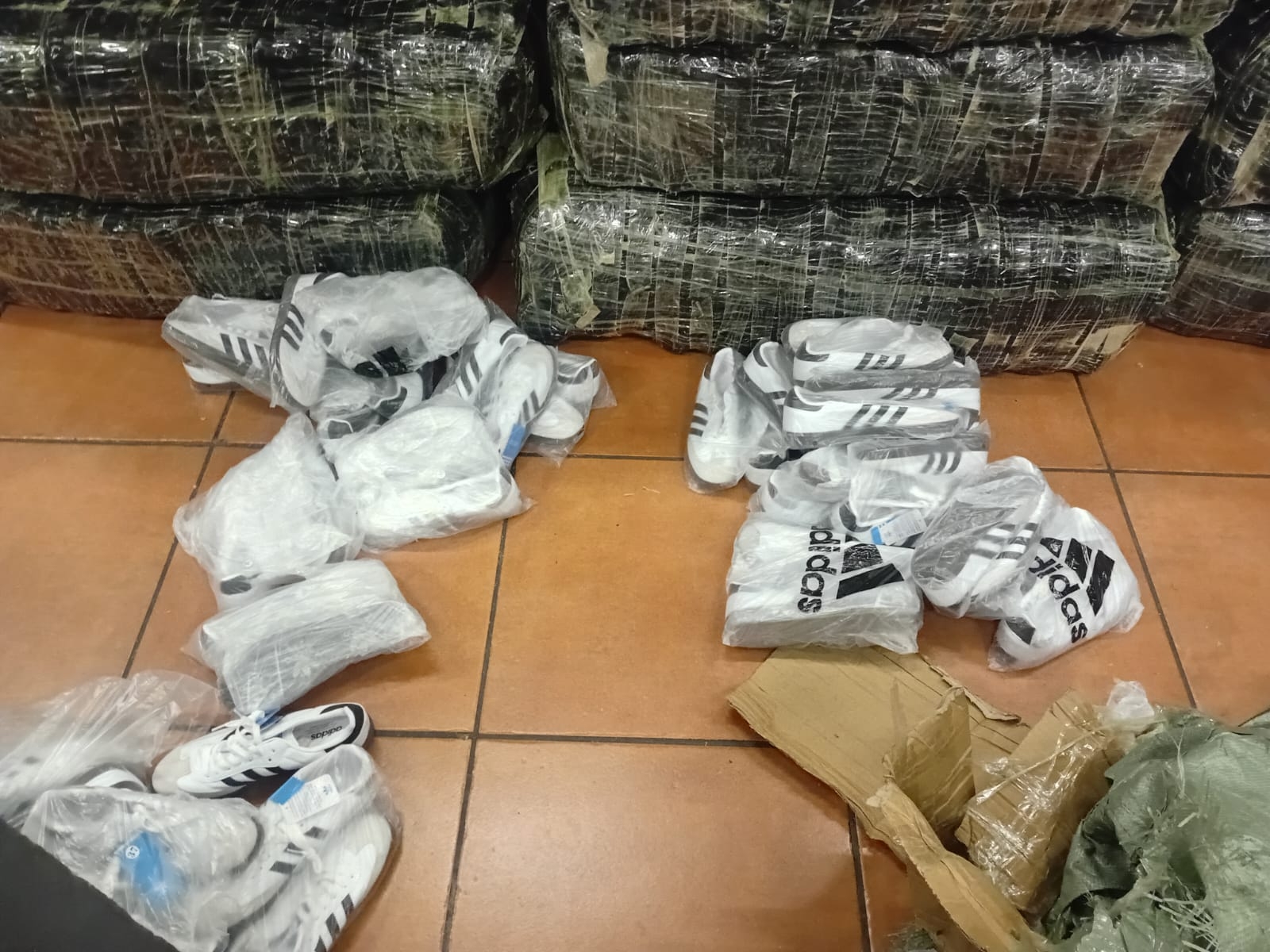
Mpumalanga Police seized 30 boxes of counterfeit sneakers valued at R2.4 million and arrested two men after stopping a truck traveling from Mozambique on the N4 highway late on March 20, 2026.
Members of the Ehlanzeni Anti-Hijacking Team acted on intelligence about a consignment of fake merchandise heading toward Nelspruit. Police identified and tactically halted the vehicle matching the description.
A search revealed the boxes containing suspected imitations of a well-known brand. All items were confiscated, and the driver, aged 39, and his crew member, aged 40, were detained and charged with possession of illicit or counterfeit goods.
Captain Mpho nonyane-mpe
The pair are scheduled to appear in the Nelspruit court in the coming days.
The bust forms part of ongoing efforts to curb the flow of counterfeit merchandise across South Africa’s eastern border. A similar interception occurred in September 2025 at the Kosi Bay port of entry with Mozambique, where Border Management Authority officers seized counterfeit goods estimated at R2.8 million and arrested two suspects.

At the time, the men travelling in a truck were found in possession of hookah pipe flavours, more than 1,000 pairs of counterfeit Nike sandals, various branded sneakers and Louis Vuitton belts. BMA spokesperson Mmeme Mogotsi said the fake products were confirmed by police and both suspects have been detained at Manguzi police station.
The commissioner of the Border Management Authority, Dr Micheal Masiapato, has confirmed that the BMA continues to intensify its fight against the smuggling of counterfeit goods into South Africa. The latest seizure forms part of the authority’s ongoing clampdown on illicit trade.
Such operations reflect a wider pattern seen in other countries. In July 2025, Honduran customs officials seized more than 14,000 pairs of counterfeit sports shoes originating from China and destined for Nicaragua, with an estimated value of $1.8 million. In 2024, French customs recorded a record 21.47 million counterfeit articles seized nationwide, valued at $751.8 million.
The trade in counterfeit goods carries measurable economic consequences. A joint study by the Organisation for Economic Co-operation and Development (OECD) and the European Union Intellectual Property Office (EUIPO) estimated that global trade in fake and pirated products reached $467 billion in 2021, equivalent to 2.3 percent of total world imports.
Within the European Union, counterfeiting in the clothing, cosmetics and toy sectors alone results in annual lost sales of €16 billion and the displacement of nearly 200,000 legitimate jobs. The clothing sector, which encompasses footwear such as sneakers, accounts for an estimated 160,000 of those job losses, with cosmetics and toys contributing approximately 32,000 and 3,600 respectively.
Earlier global modeling by the International Chamber of Commerce’s BASCAP initiative projected net job losses worldwide from counterfeiting and piracy at between 2 million and 2.6 million in 2013, with a rise to 4.2 million to 5.4 million anticipated by 2022.