

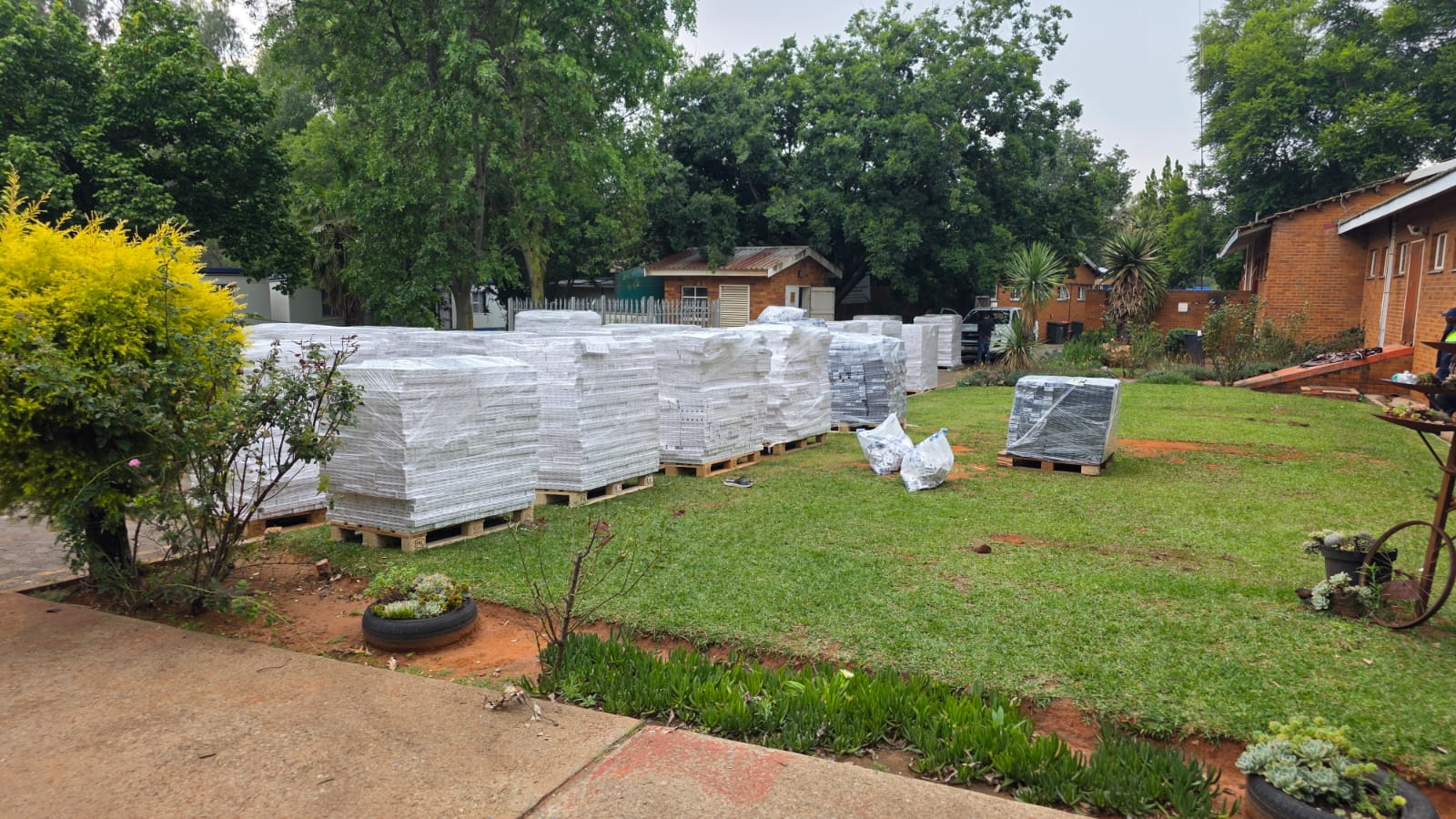
In the shadow of South Africa’s bustling highways and porous borders, a shadowy economy thrives, one carton at a time. Illicit cigarettes, smuggled from neighboring countries like Zimbabwe and sold at a fraction of legal prices, now dominate an estimated 75 percent of the market.
This underground trade isn’t just a nuisance, it’s a multibillion rand juggernaut eroding tax revenues, fueling organized crime, and now, forcing major corporations to shutter operations. The recent announcement by British American Tobacco South Africa (BATSA) to close its Heidelberg manufacturing facility underscores a stark reality: when crime pays better than compliance, legitimate businesses and the jobs they sustain, are the first casualties.
BATSA’s decision, revealed in a press release on January 15, marks the end of an era for local cigarette production. The Heidelberg plant, operational since 1975 and once a cornerstone of the Lesedi Municipality in Gauteng, will cease manufacturing by year’s end, shifting to an import model. “With approximately 75% of the South African cigarette market now estimated to be illicit, continued local manufacturing has become unviable,” said Johnny Moloto, BATSA’s Head of Corporate & Regulatory Affairs. The facility, BAT’s eighth-largest globally, now runs at just 35 percent capacity due to volume losses from illegal competition. This closure threatens 230 direct jobs, with ripple effects across suppliers, logistics providers, and the broader community—potentially endangering up to 35,000 positions in the tobacco value chain.
But BATSA’s plight is merely the tip of a smoldering iceberg. Critics, including ActionSA Member of Parliament Alan Beesley, lambast the government for its “sustained failure to combat illicit tobacco trade and enforce its own tax and customs laws.” In a January 15 statement, Beesley called the closure a “disgraceful indictment,” pointing to excessive excise duties—dubbed “sin taxes”—that make legal products uncompetitive. A legal pack of 20 cigarettes retails for about R35, with a minimum tax of R26.22 (R22.80 excise plus R3.42 VAT), while illicit versions sell for far less, often evading all duties. ActionSA warns that the alcohol sector is next, with one in five drinks already illicit and 37 percent cheaper than legal alternatives.
How did South Africa, a nation with Africa’s most advanced economy, allow criminal syndicates to capture such a vast market share? Experts trace the surge to the 2020 COVID-19 tobacco sales ban, deemed unconstitutional, which decimated legal sales and entrenched black-market networks. Post-ban, illicit trade exploded, exacerbated by above-inflation excise hikes that widened the price gap. The South African Revenue Service (SARS) itself warned Parliament last year that proposed tobacco legislation could worsen the problem. Yet, enforcement remains woefully inadequate, with porous borders like Beitbridge facilitating smuggling from Zimbabwe.
Recent police seizures offer glimpses of progress but underscore the scale of the challenge. In December 2025, Mpumalanga police raided a truck in Delmas, uncovering illicit cigarettes worth R17.4 million hidden in massive water tankers—an Eswatini national was arrested in this cross-border operation. 27 Days later, in Limpopo, the South African National Defence Force (SANDF) intercepted a Zimbabwe-bound Hino truck at a border checkpoint, seizing R3.47 million in contraband cigarettes under Operation Corona. Nationwide festive season crackdowns by the South African Police Service (SAPS) netted over R350 million in counterfeit and illicit goods, including more than R1 million in cigarettes, liquor, and medicines across Gauteng, KwaZulu-Natal, and the Western Cape—resulting in 33 arrests.
Early January 2026 brought more busts: In Bethal and Carolina, Mpumalanga, two suspects aged 39 and 43 were nabbed with R93,000 worth of illicit cigarettes during Operation Safer Festive Season. In the Free State, a Viljoensdrift checkpoint yielded 4,342 cartons valued at R218,000 from a truck on the R82. Limpopo saw high-drama chases, like the arrest of two Zimbabwean nationals in Tzaneen after pursuing two Toyota Corollas loaded with R180,000 in Remington Gold cigarettes. In Vhembe District, a joint operation seized R40,000 in illicit stock, while Upington police grabbed over R3 million in another haul. These operations often reveal sophisticated concealment: cigarettes stashed in hidden vehicle compartments, water tanks, or even amid legitimate cargo.
Despite these victories, the illicit trade’s grip tightens. South Africa ranks among the world’s top five markets for illegal cigarettes, costing the fiscus billions in lost revenue annually—estimates peg it at R20 billion to R30 billion yearly. Criminals exploit weak border controls, corruption at ports, and under-resourced agencies like SAPS, SARS, and the Border Management Authority. Opposition figures like Democratic Alliance’s Dion George decry it as “a reflection of a failing government,” urging a halt to excise increases and better funding for enforcement.
The broader implications are chilling. Illicit trade isn’t confined to tobacco; it’s infiltrating alcohol, pharmaceuticals, cosmetics, food, clothing, and even toys, as Moloto warned. If unchecked, it could dismantle entire industries, exacerbating unemployment in a country where over 32 percent are jobless. ActionSA challenges the Government of National Unity (GNU): Does it back policies that attract investment and protect jobs, or ones that feed criminal networks?
BATSA’s Moloto offers a glimmer of hope: Should illicit trade decline substantially, the company would reinvest in local production. But as seizures mount and factories close, it remains to be seen whether South Africa will stub out this black market blaze before it consumes more livelihoods? The answer lies not in sporadic raids, but in coordinated, whole of government action, lest the nation’s economic future go up in smoke.