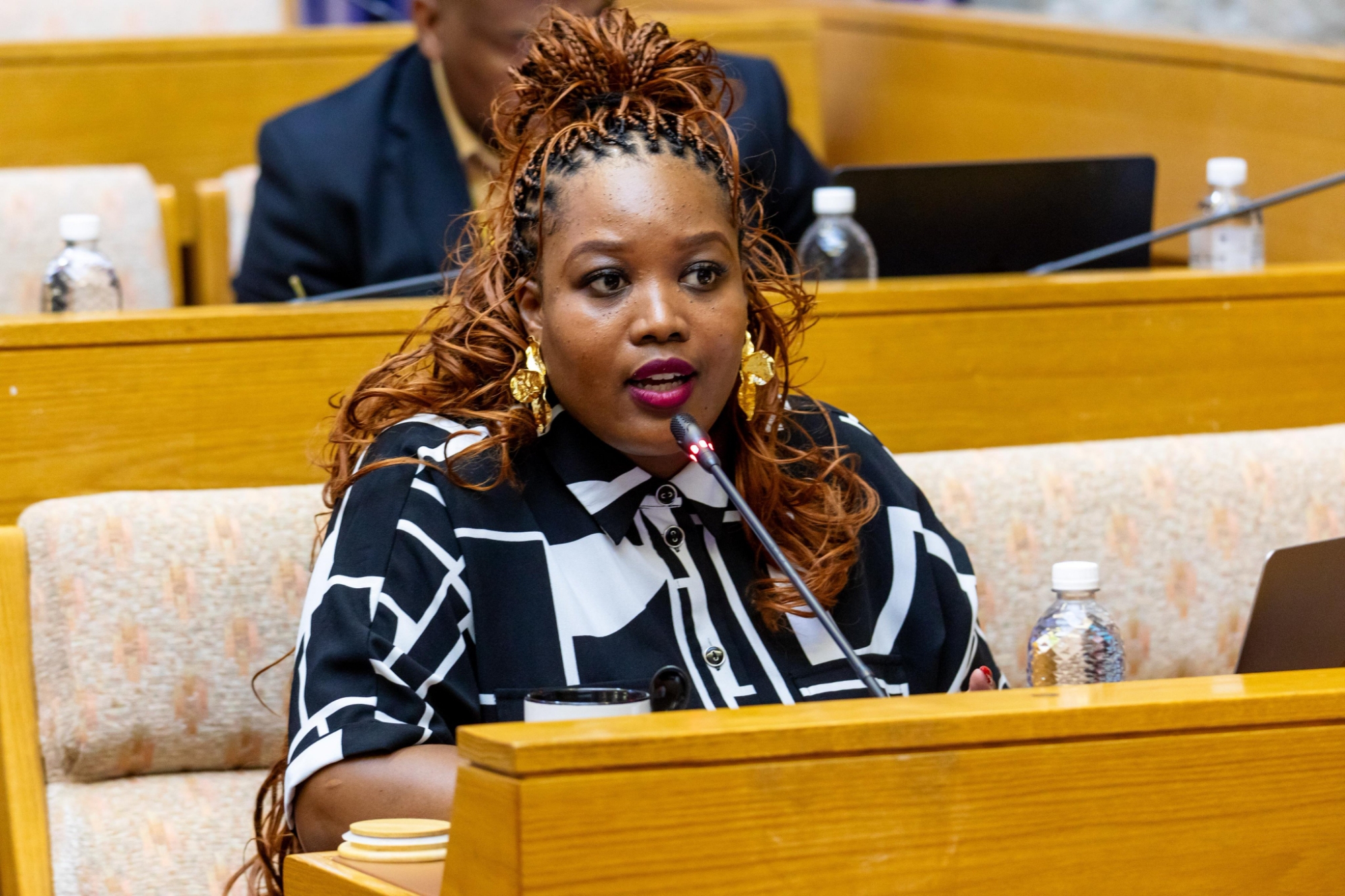
Karabo Khakhau, a rising figure within the Democratic Alliance (DA), has announced her withdrawal from the race for Deputy Chairperson of the party’s Federal Council, citing what she describes as a disputed financial compliance issue and an uneven application of internal rules.
In a detailed letter addressed to party members, Khakhau said her decision followed a ruling by the DA’s Free State Provincial Executive Committee (PEC), which declined to grant her a letter of good financial standing which is a prerequisite for candidacy. The decision was later upheld by the party’s Federal Executive (FedEx).
Khakhau acknowledged that she had missed a single monthly tithe payment in July of the previous year but stated that the matter had been promptly rectified. According to her account, she settled the outstanding amount within 24 hours of receiving a demand notice and continued to meet all subsequent financial obligations.
“I do not owe the DA a cent,” she wrote, emphasizing that her record was otherwise compliant.
Despite this, Khakhau said the party structures refused to reinstate her eligibility, effectively disqualifying her from contesting the leadership position. She argued that the decision was inconsistent with past precedents, where other leaders facing similar issues had been allowed to participate in internal elections.
The withdrawal marks a significant development in the DA’s internal leadership contest, particularly as the party seeks to consolidate its position ahead of the 2029 general elections. Khakhau had positioned her campaign around strengthening party structures and mobilizing underrepresented voter groups, especially young people and women.
In her earlier campaign message to Federal Council delegates, Khakhau stressed that “the strength of any organisation lies in the health of its structures,” calling for renewed focus on grassroots engagement through party branches and affiliated bodies.
She also highlighted the importance of reconnecting with key voter demographics, noting that “the majority of this country’s voter base is black, young and female,” a group she argued remains insufficiently mobilized by the party.
Her campaign platform included collaboration with internal formations such as youth, women, and diaspora structures, aiming to broaden the DA’s appeal and organizational reach.
Political analysts say her withdrawal could have ripple effects within the party, particularly among younger members and those advocating for structural reforms. While the DA has not publicly detailed the specifics of the ruling, the incident may raise broader questions about internal governance and consistency in rule enforcement.
Khakhau, however, struck a measured tone in her closing remarks, expressing gratitude to her supporters and maintaining that her political engagement within the party would continue.
“Together, we can still fight from where we are to build structures and win the future,” she wrote.
Her exit leaves the Deputy Chairperson race without one of its more prominent and reform-oriented candidates, at a time when the DA is seeking to refine its strategy and leadership ahead of a critical electoral cycle.