



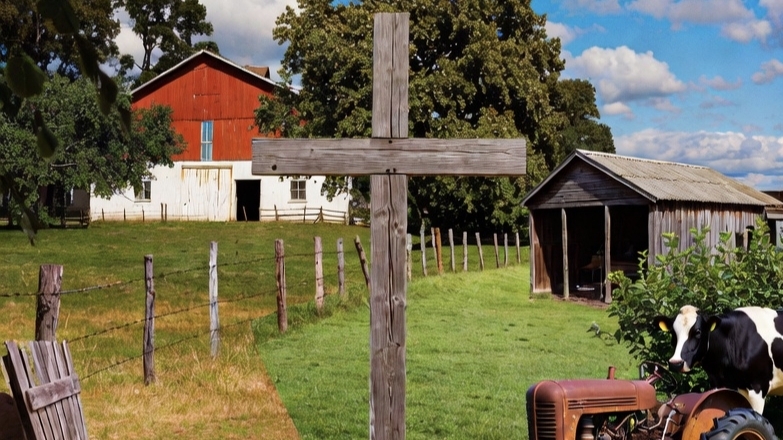
Five suspects were arrested over the weekend and are expected to appear in the Humansdorp Magistrate’s Court on Monday, 2 February, on charges including murder, house robbery and possession of suspected stolen property in connection with the fatal stabbing of a 60-year-old man on a smallholding outside Humansdorp last week.
According to Eastern Cape police spokesperson Warrant Officer Majola Nkohli, officers arrested the five men, aged between 22 and 37, after they were found in possession of items believed to have been taken during the attack. The suspect group was linked to the murder of Deon du Toit, whose body was discovered on the farm along the R102 on Tuesday morning, 27 January. Officers allege du Toit was confronted by multiple assailants in the early hours of the morning and sustained multiple wounds during a scuffle before succumbing to his injuries.
Du Toit who was not the owner of the property but rented part of the premises was reportedly able to activate a panic alarm during the attack, prompting a private security response. He later died at the scene.
This incident forms part of a broader pattern of violent crime affecting rural areas of the Eastern Cape, where farm and smallholding robberies and murders have periodically drawn national attention. Official South African Police Service statistics show that farm murders defined as murders occurring on agricultural holdings, comprise a small fraction of the country’s overall homicide figures, but remain a concern for local communities and law enforcement alike.
In recent years, farmers, farmworkers and rural residents have featured among victims of violent crime. While law enforcement emphasizes that such incidents are part of South Africa’s wider crime challenges rather than racially targeted campaigns, civil society groups tracking rural crime have highlighted specific cases to draw attention to safety deficiencies.
The debate over rural crime in South Africa has spilled beyond domestic policy into politics and international relations. Civil rights organisations such as AfriForum and the Solidarity Movement have been highly vocal in pushing for greater acknowledgement of farm murders and rural safety. During visits to the United States and in public statements, these groups have sought to press South African and international officials to treat farm murders as a priority issue.
Their campaigns have coincided with strained diplomatic relations between South Africa and the administration of U.S. President Donald Trump, who in late 2025 took an unusually hard line on South African rural crime and land issues. Trump announced that U.S. officials would boycott the 2025 G20 summit in Johannesburg, citing what he described as failures by the South African government to protect white farmers from violence, allegations that Pretoria rejected as unfounded and inflammatory.
The South African government has consistently emphasised that farm murders are part of the broader national crime situation, rejecting claims that they constitute a targeted campaign against any particular racial group. Officials and independent experts have noted that while rural crime is serious and tragic, characterisations that frame these attacks as evidence of “genocide” are misleading and not supported by verified statistics.
Domestic political tensions have also surfaced. Suspended Police Minister, Senzo Mchunu, publicly challenged AfriForum to substantiate claims that official figures underreported farm murders, underscoring the government’s commitment to transparent crime statistics.
As the five suspects in the Humansdorp case await their court appearance, families and communities in the Eastern Cape continue to call for effective policing and preventive measures in rural districts. Law enforcement officials are urging anyone with information about the murder or related criminal networks to come forward. Meanwhile, the broader public conversation around rural crime, farm safety and state responses shows no sign of abating.


