


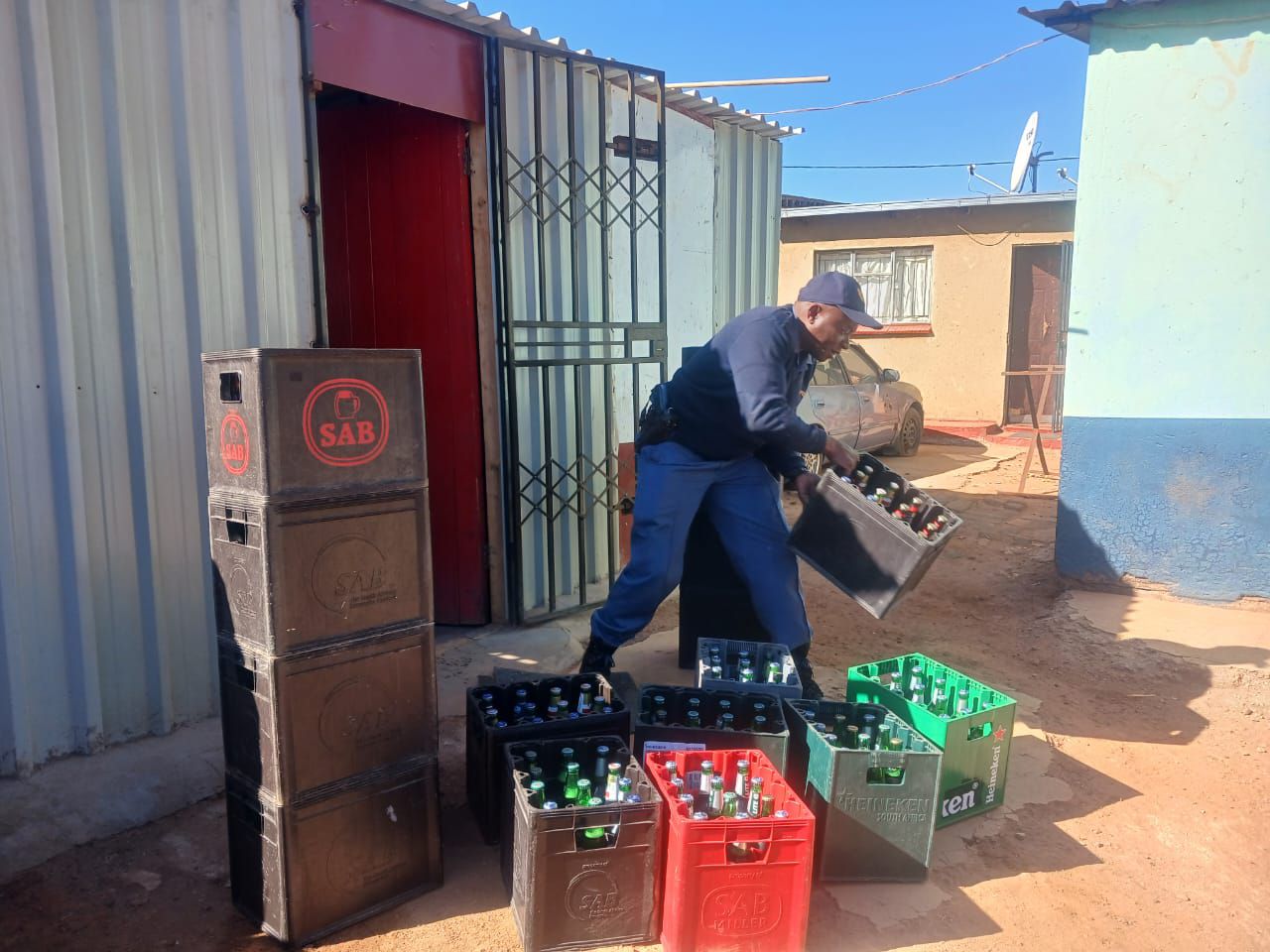
Nearly 12,000 unlicensed venues shuttered in six months, yet mass shootings and deadly incidents claim dozens of lives
South African authorities have shuttered 11,975 illegal liquor outlets nationwide between April and September this year, arresting more than 18,676 individuals for unlicensed alcohol sales, in a sweeping effort to curb crime hotspots. Yet the campaign has done little to stem a surge in deadly violence at both licensed and unlicensed drinking establishments, with the latest tragedy unfolding Saturday in an illegal Pretoria shebeen where gunmen killed 11 people, including three children, and wounded 14 others.
The shutdowns, part of intensified police operations under Operation Shanela, targeted unlicensed shebeens often linked to drug trade, gang activity, and public safety risks.
“These illegal shebeens are really giving us a problem as the police because a lot of murders are being reported at these illegal establishments,” National Police spokesperson Brigadier Athlenda Mathe said in a statement following the Saulsville Hostel shooting in Atteridgeville, west of Pretoria.
Between April and September this year, we actually shut down throughout the whole country 11,975 of these illegal shibbins. So it’s quite problematic because also in these mass shootings, it’s either they happen at unlicensed premises or illegal shebeens
The Pretoria incident, where three armed suspects entered the unlicensed venue around 4:15 a.m. and fired indiscriminately, underscores the challenges. Mathe noted that police were only alerted two hours later, allowing the gunmen to flee. “We are having a serious challenge when it comes to these illegal and unlicensed liquor premises,” she added, emphasizing that such sites frequently ensnare innocent bystanders in crossfire. A multidisciplinary team, including forensic and ballistics experts, has been mobilized, with cases registered for 11 counts of murder and 14 counts of attempted murder.
This bloodshed echoes a pattern of mass casualties in South Africa’s liquor outlets, where shootings and other fatalities have proliferated despite enforcement drives. In May, gunmen killed eight customers at a tavern in Durban, the southeastern port city, in a brazen daytime attack. Last month, seven men aged 20 to 30 were fatally shot in Philippi East, a gang-plagued suburb of Cape Town, in what police described as a “senseless act of violence” near Road R53. In October, two teenagers died and five were wounded in a gang-related shooting in Johannesburg.
Even licensed venues have proven deadly. On October 5, five patrons were killed and six injured in a shooting at a tavern in Zithobeni, Bronkhorstspruit, east of Pretoria, after suspects demanded a licensed firearm from a customer and fired randomly as patrons fled. The South African Police Service (SAPS) later arrested two suspects, recovering an unlicensed pistol with filed-off serial numbers. Witnesses reported the gunmen were known locally, highlighting community ties to such violence.
Non shooting incidents compound the crisis. The 2022 Enyobeni Tavern disaster in East London, Eastern Cape where 21 young people, mostly minors celebrating the end of exams, suffocated amid overcrowding exposed regulatory failures, including sales to underage drinkers despite prior complaints. A 2024 South African Human Rights Commission report slammed the Eastern Cape Liquor Board, SAPS, and local authorities for inadequate monitoring, noting the venue’s liquor license was suspended but not revoked promptly. Toxicology reports ruled out poisoning or stampede, confirming overcrowding as the cause, though families continue to demand accountability.
SAPS data from KwaZulu-Natal’s January operations alone revealed alcohol’s role in 2,138 assault cases, with 775 arrests for illegal liquor dealing. Broader trends show Gauteng recording 1,443 murders out of 5,794 nationwide in recent quarters, many tied to drug-infested shebeens.
“We are intensifying our operations in terms of our inspections,” Mathe said, vowing round-the-clock tracking by specialized units. Gauteng Premier Panyaza Lesufi echoed the call, labeling illegal outlets “magnets for criminal activity” and promising stricter compliance checks. The City of Tshwane, mourning the Saulsville victims, committed to supporting SAPS and urged residents to report suspicious activity.
As a manhunt intensifies for the Pretoria suspects, experts warn that socioeconomic factors like unemployment, poverty, and weak enforcement fuel the cycle. “Illegal shebeens continue to create unsafe conditions in many communities and are a significant driver of crime and disorder,” said Tshwane’s MMC for Community Safety, Alderman Hannes Coetzee.


