

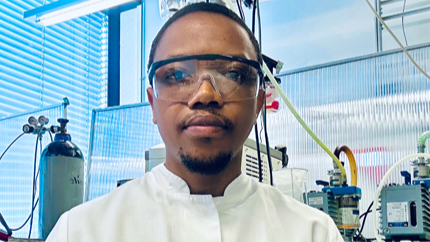
In a laboratory at the University of the Witwatersrand, researchers are harnessing the power of nanotechnology to challenge one of humanity’s oldest adversaries: tuberculosis. A new inhalable nanosystem, developed by postdoctoral researcher Dr. Lindokuhle Ngema at the Wits Advanced Drug Delivery Platform (WADDP), promises to deliver TB medications directly to the lungs, where the bacterium Mycobacterium tuberculosis conceals itself.
The innovation, detailed in a university release dated Oct. 28, represents a potential shift in how the world treats this persistent disease. The nanocarrier, described as a miniature container for medicine, can encapsulate all four standard TB drugs—rifampicin, isoniazid, ethambutol, and pyrazinamide—in a single formulation. Once inhaled, it releases them precisely at the infection site, bypassing the liver and bloodstream to reduce drug loss and boost local concentration in the lungs.
TB is clever. It hides in lung pockets where oral drugs can’t reach. Our system is designed to be smarter and to go exactly where it’s needed.
Mycobacterium tuberculosis, a slow-growing, rod-shaped bacterium, has plagued humankind for roughly 9,000 years. Despite advances in medicine, it continues to cause about 10 million new infections and 1.8 million deaths annually worldwide. In South Africa, the toll is particularly stark, with more than 56,000 lives lost to TB in 2023 alone. The bacillus spreads through the air via coughs, sneezes, or speech from infected individuals. While most South Africans receive the BCG vaccine in infancy to prevent TB, its protection diminishes by adolescence, leaving adults susceptible.
The World Health Organization (WHO) underscores the urgency, noting that TB imposes “catastrophic” costs on affected households. Its End TB Strategy aims for 80 percent fewer new cases and 90 percent fewer deaths by 2030—goals that require innovative approaches beyond traditional methods.
“If we want to end TB, we must also address the limitations of one-size-fits-all drug delivery,” says Professor Yahya Choonara, director of WADDP.
Precision nanomedicine like this allows us to treat smarter, faster and with greater impact, which is exactly what the WHO’s End TB Strategy is calling for.
Current standard treatment involves taking the four key anti-TB drugs over six months, a regimen fraught with challenges. Side effects such as nausea, liver damage, and neuropathy often lead patients to discontinue medication, allowing the disease to mutate into multidrug-resistant (MDR) and extensively drug-resistant (XDR) forms. The WADDP team posits that inhalation therapy could circumvent these issues by delivering medicine straight into the respiratory tract, from the nose and bronchi to the alveoli.
“We hope that this could shorten treatment time, improve adherence, and help limit the rise of drug resistance,” explains Dr. Ngema.
At the heart of the system is a biocompatible carrier engineered at the molecular level. It is non-toxic, evading recognition by the body as foreign or dangerous. Inhaled nanoparticles penetrate deep into the lungs, gradually releasing their payload at the infection site. A standout feature is its traceability: Collaborating with the Nuclear Medicine Research Institute (NuMeRI), the team plans to use nuclear imaging to monitor nanoparticle movement in real time, verifying if the drugs reach the “hidden” TB pockets overlooked by conventional therapy.
The beauty of nanoscale science is that you can design a system that responds to the environment inside the body. We can control where and when the drugs are released.
The project originated at WADDP under Choonara, whose lab focuses on targeted nanomedicines and advanced drug delivery systems. Supported by a World Academy of Sciences (TWAS) fellowship, Ngema conducted three months of experiments in Professor Twan Lammers’ lab at the RWTH Aachen University Hospital’s Institute for Experimental Molecular Imaging (ExMI) in Germany to refine drug release profiles.
We wanted to combine the four main TB drugs in a single inhalable dose, reducing treatment time and making therapy simpler for patients. Our early results show that this is possible. Now we’re working to translate it to real-world use.
For Ngema, the work transcends science.
TB has taken too many lives for too long. If we can make treatment easier, faster and smarter, then we’re not just improving outcomes, but restoring hope.
TB’s persistence highlights broader issues of inequality, thriving amid poverty and strained health systems. In low-resource areas, prolonged oral regimens are difficult to maintain, with each missed dose risking resistant strains and perpetuating the epidemic. Innovations like this nanosystem could alleviate patient burden, enhance treatment precision, and increase eradication prospects.