

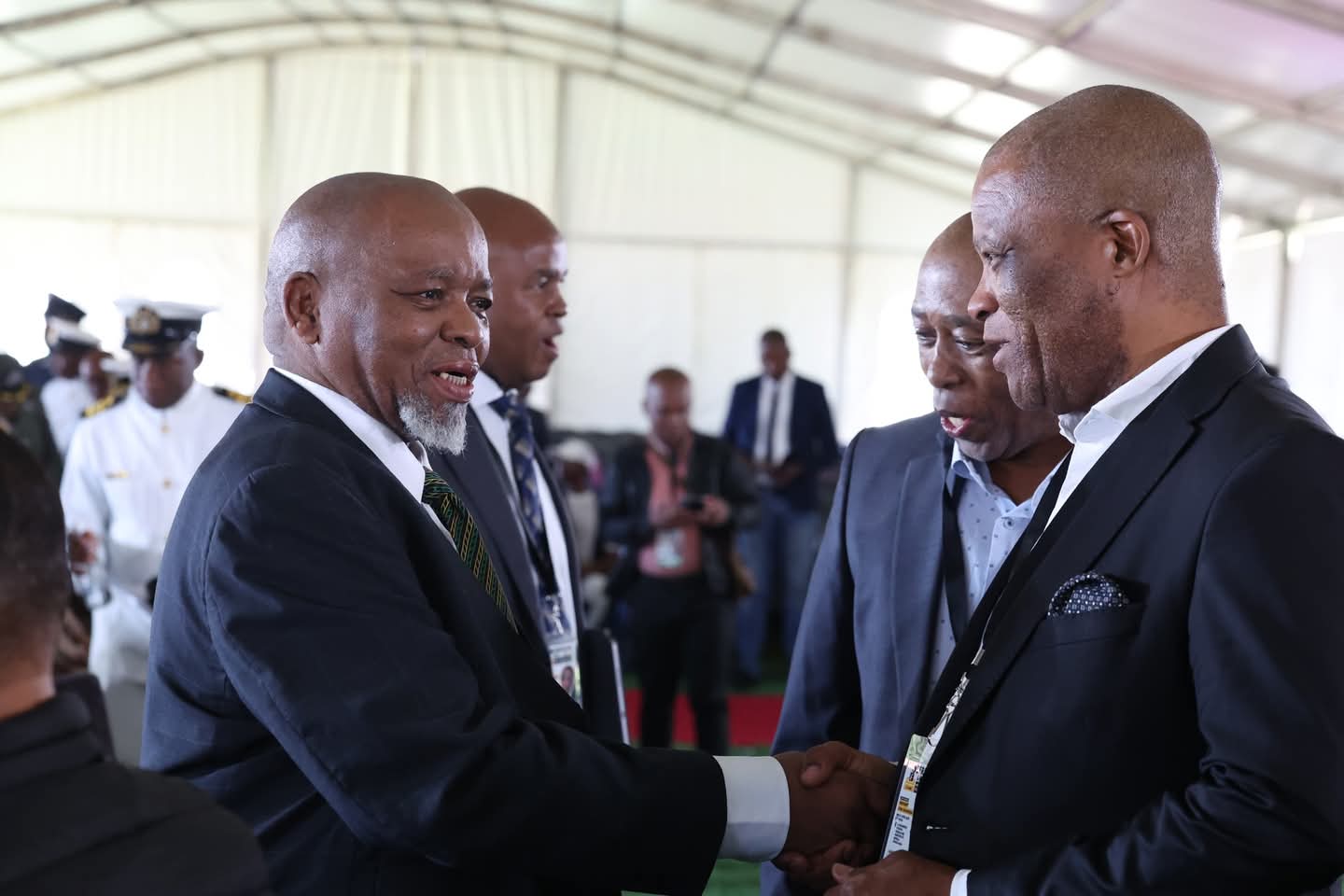
On a sunlit morning at AJ Swanepoel Stadium in Ermelo, South Africa marked the 31st anniversary of its first democratic elections with a stirring address delivered by Minister of Mineral and Petroleum Resources Gwede Mantashe on behalf of President Cyril Ramaphosa.
Commemorating Freedom Day, the speech celebrated the nation’s historic transition to democracy on April 27, 1994, while urging South Africans to resist division and recommit to reconciliation.“I greet you all on this glorious day as we celebrate our freedom,” Mantashe began, addressing a diverse gathering that included justices, premiers, parliamentarians, traditional and faith-based leaders, and ordinary citizens.
Reflecting on the historic 1994 elections, he recalled how “the eyes of the world were on South Africa” as millions of people—Black, Indian, Coloured, and White—voted together for the first time. “On the 27th of April 1994, the dignity of South Africa’s people – both black and white – was restored,” he said, quoting former President Nelson Mandela: “In the system of apartheid, both the oppressed and the oppressor are robbed of their humanity.”
Mantashe emphasized the resilience of South Africans who, despite a “deeply divided” nation and high tensions, defied predictions of a race war by standing “patiently and peacefully in long queues” to vote. He praised the nation’s choice of “reconciliation over revenge, healing over hatred, peace over conflict,” decisions that have defined South Africa’s “national character” and elevated its global moral standing. “We have been sought out by countries embroiled in conflict, hoping to learn from our experience with national reconciliation, conflict resolution and dialogue,” he noted, citing a recent visit from Ukrainian President Volodymyr Zelensky to discuss South Africa’s role in the African Peace Initiative to end the Russia-Ukraine conflict.
The minister highlighted South Africa’s progressive foreign policy, rooted in solidarity with nations that supported its anti-apartheid struggle. “We stand with the peoples of Palestine, of Western Sahara, of the eastern DRC, of Sudan, of Yemen, and with victims of gender oppression in Afghanistan and other parts of the world,” he declared, affirming the country’s commitment to ending global conflict and suffering.
Turning to domestic challenges, Mantashe warned against those seeking to “drive a wedge between us” by rekindling “racial bitterness.” He condemned efforts to “rewrite history” and cast the Black majority, historically oppressed, as oppressors. “We will not allow anyone else to define us, to tell us who and what we are, or to turn us against one another,” he asserted, invoking the Ubuntu principle: “Umuntu ngumuntu ngabantu. You are because I am.”
Paying tribute to anti-apartheid heroes of all races, Mantashe singled out Afrikaner clergyman Beyers Naude, whose 110th birth anniversary will be commemorated on May 10. “Oom Bey would go on to play a significant role in fighting the unjust system from which he was a beneficiary,” he said, also honoring Bram Fischer, Breyten Breytenbach, Athol Fugard, Ingrid Jonker, and others who rejected apartheid’s tyranny.
As South Africa celebrates Freedom Day, Mantashe called for unity to protect the nation’s democratic gains. “Let us recommit ourselves to the ideals of our Constitution, to the pursuit of human dignity,” he urged, pledging to stand firm against corruption, crime, and gender-based violence. “No matter how difficult times may be, let us stand united,” he concluded, wishing all a “blessed and happy Freedom Day.”